
How custom chandeliers are made, from steel frame to export crate
This is how custom chandeliers are made in our factory: drawings, frames, glass, wiring, trial assembly and packing, all photographed on our floor.
How are custom chandeliers made?
Every order follows the same path: an approved shop drawing, a steel frame formed in our hardware department, dressing with crystal, glass, resin or LED parts, wiring, a full trial assembly with the lights on, and packing into labeled export crates. Because every part is fitted and lit here, one team answers for the finished fixture.
What does a shop drawing fix before production?
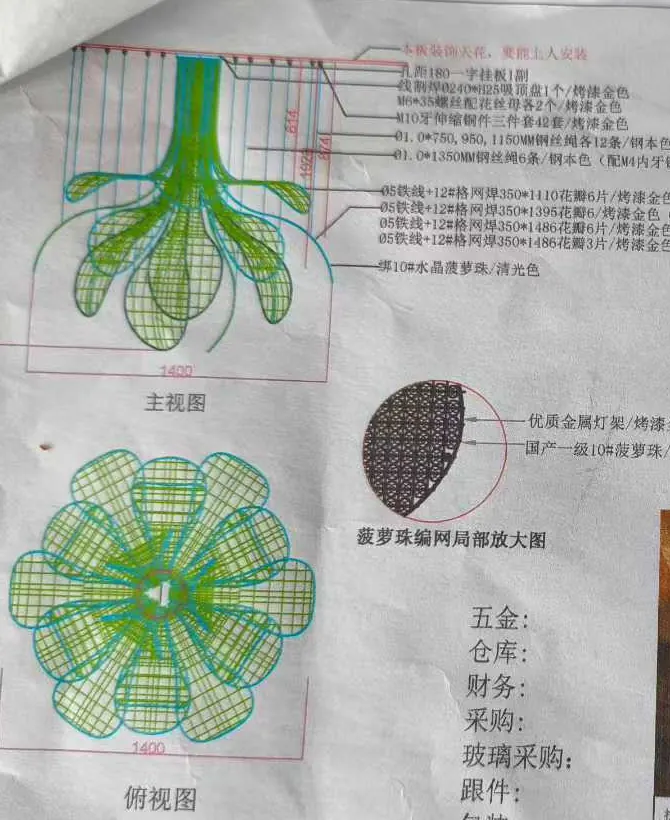
A shop drawing fixes the size, the frame, every hanging part and how the fixture meets the ceiling. The woven bead flower below was drawn at 1400mm across and 750mm high, with a welded steel frame, mesh petals in baked gold paint and crystal beads woven over the mesh. The client signs the drawing before we start.
Technical notes on the same sheet set the build standard: frames welded by qualified welders to the Chinese steel-structure weld standard GB 10854-89, welds ground three times before painting, and flame-retardant, high-temperature cables and lamp holders with China CCC certification.

What happens at each step in the factory?
Hardware forming
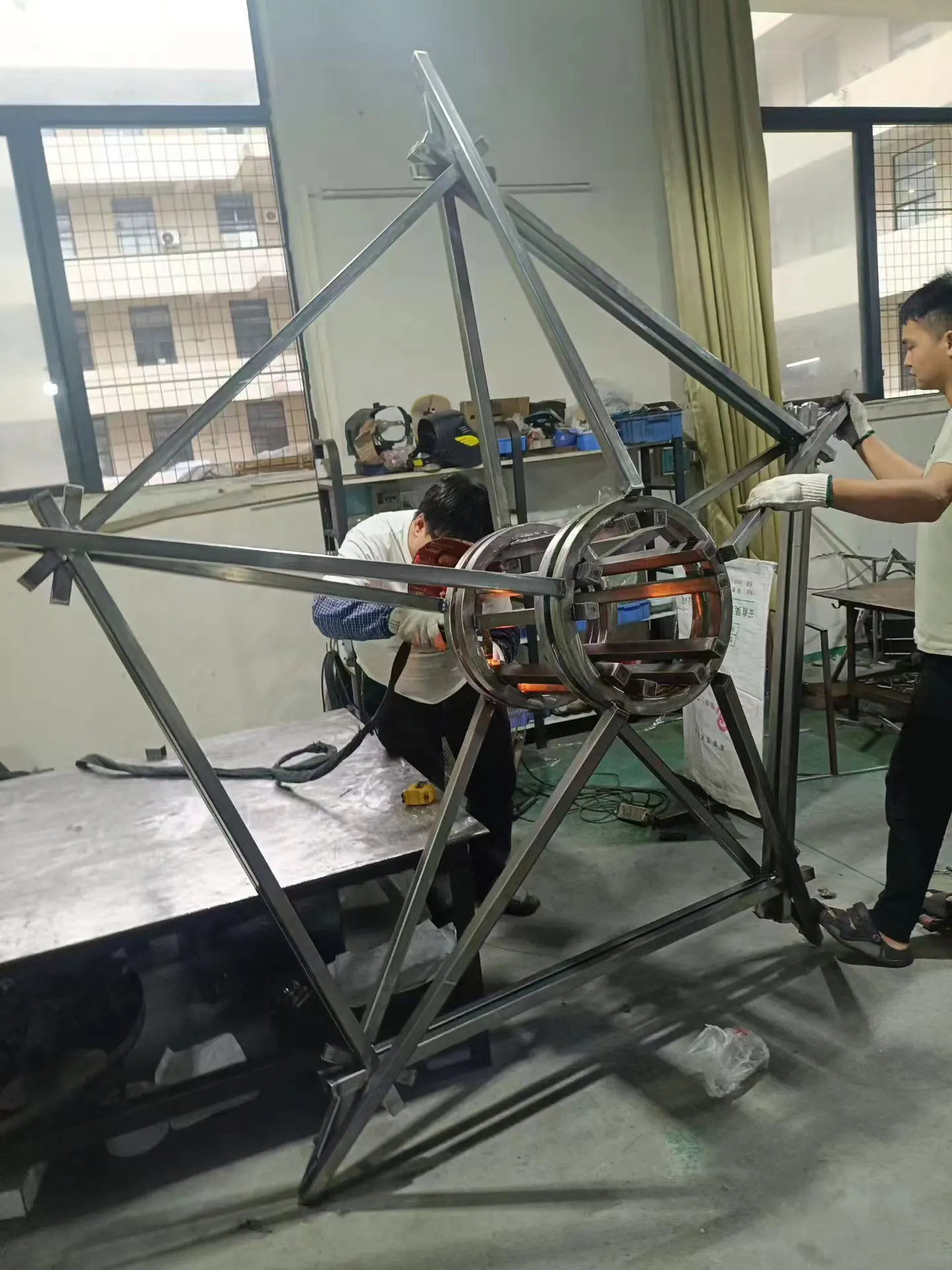
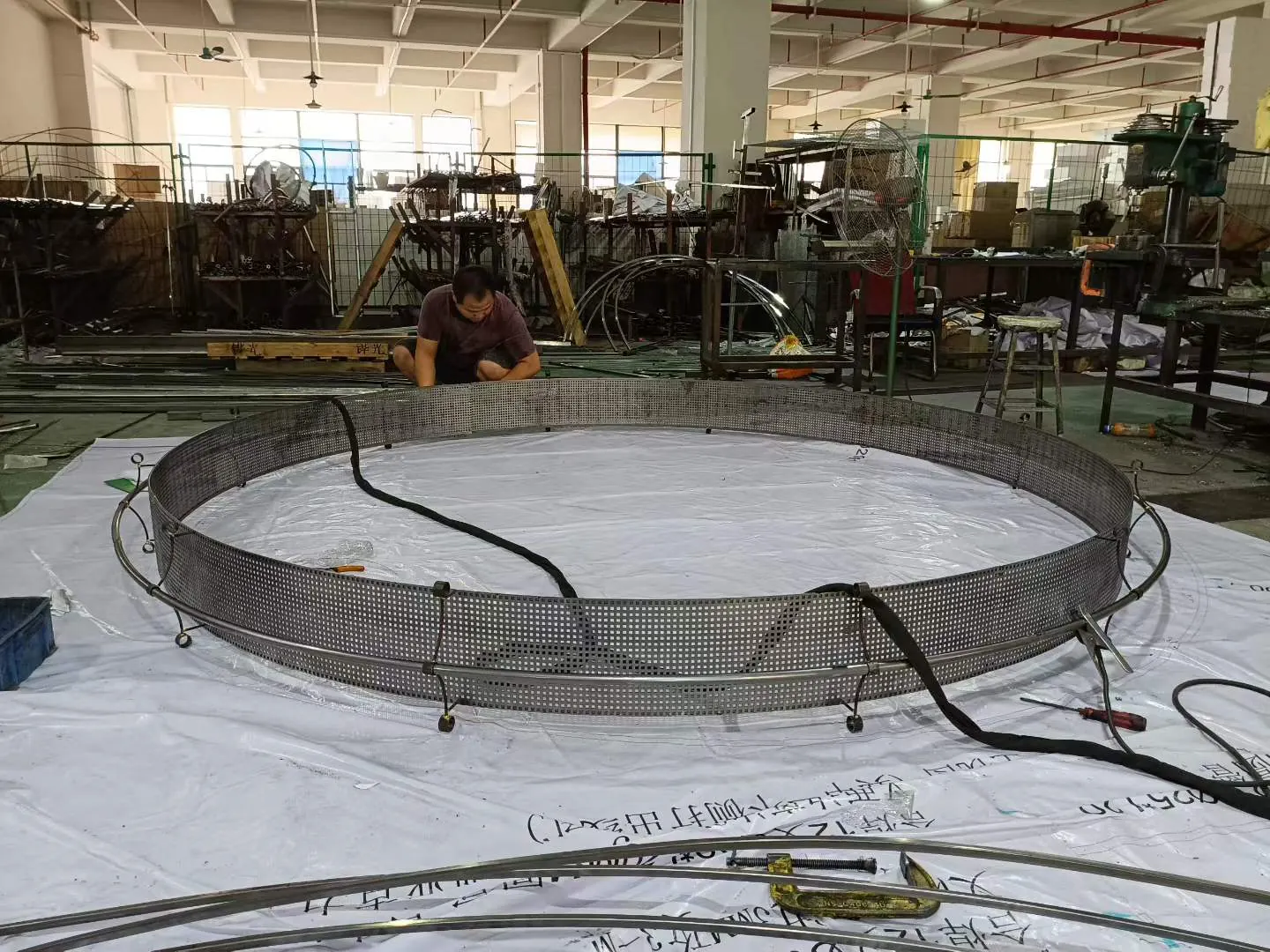
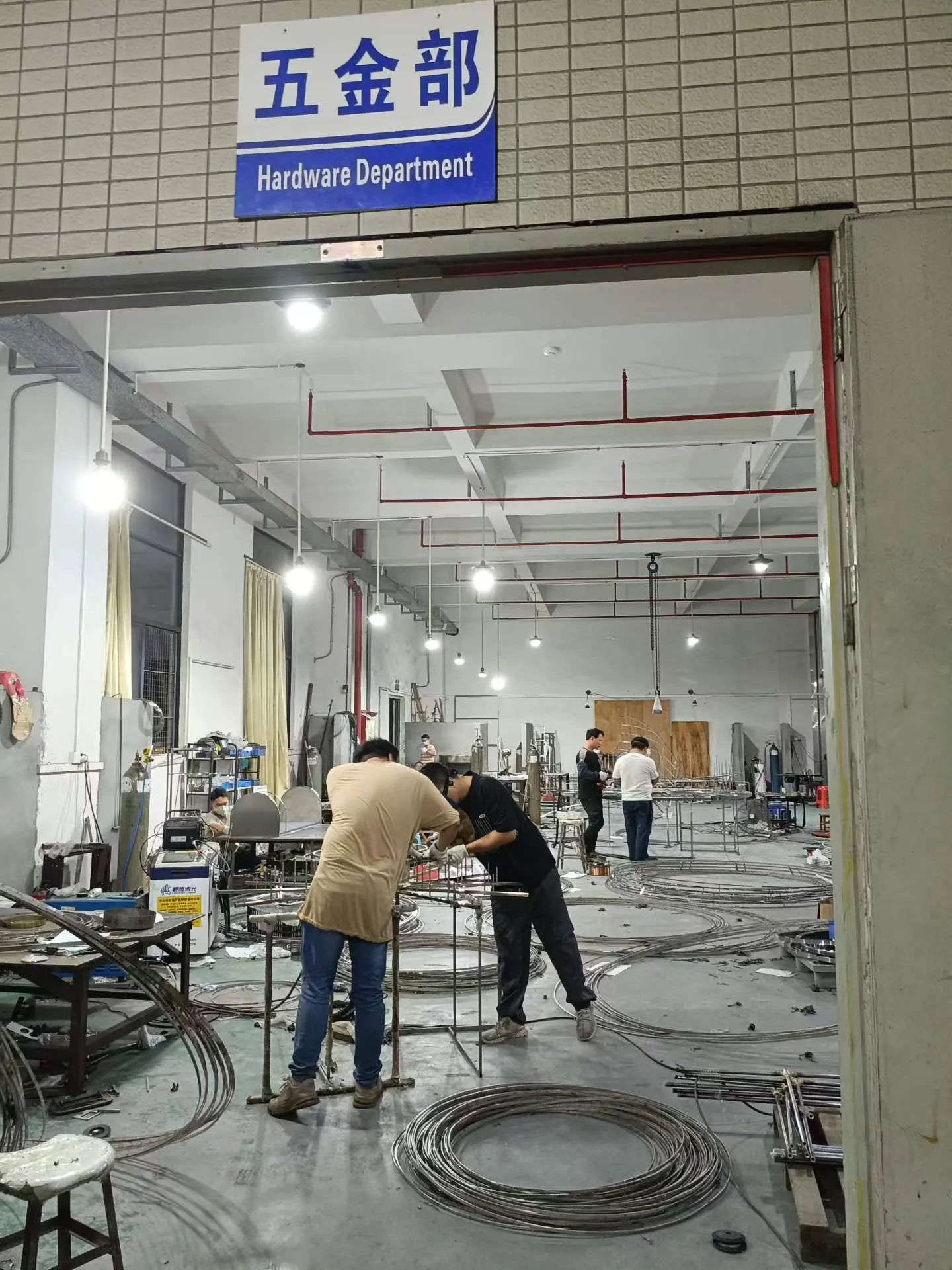
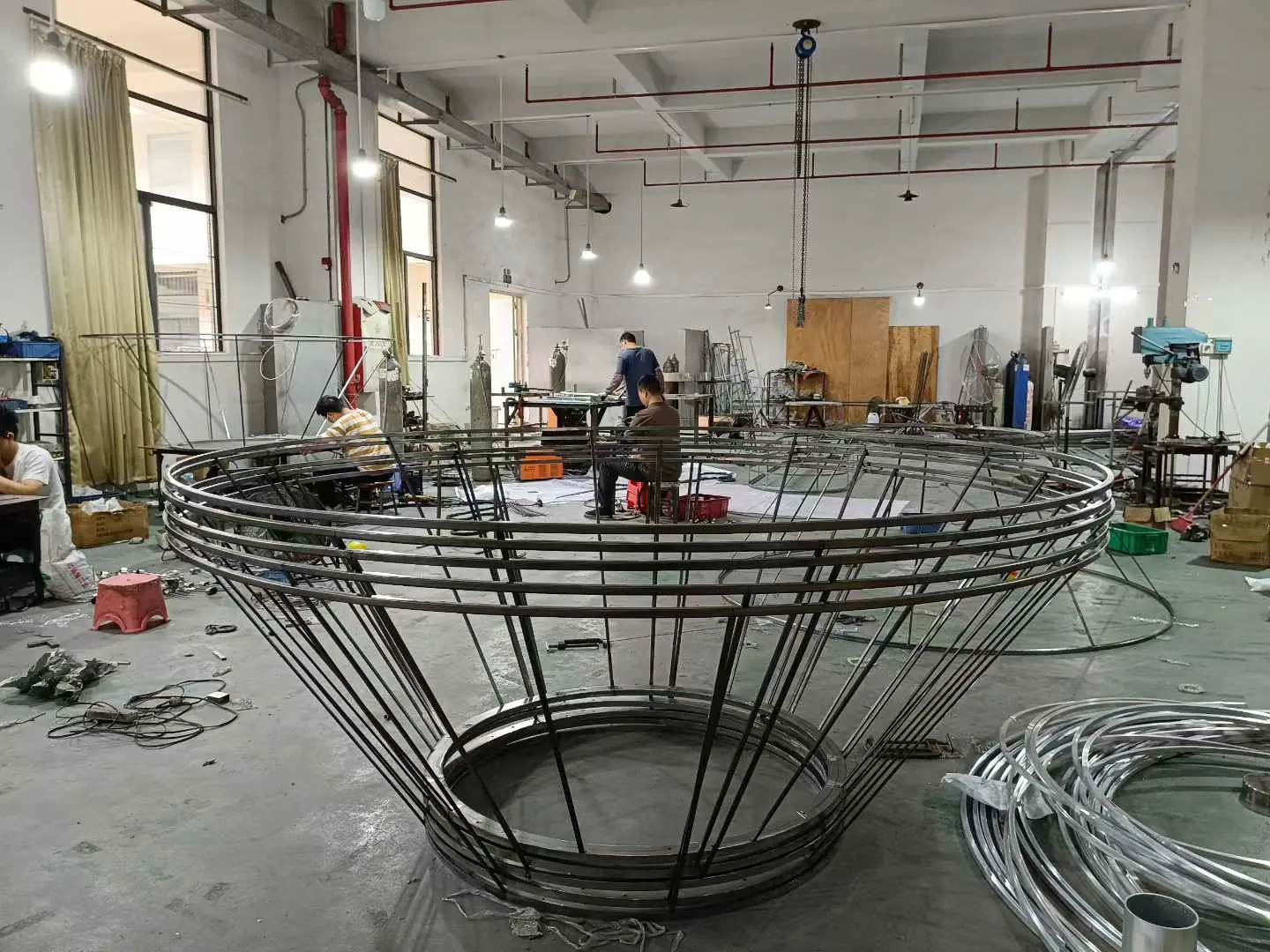
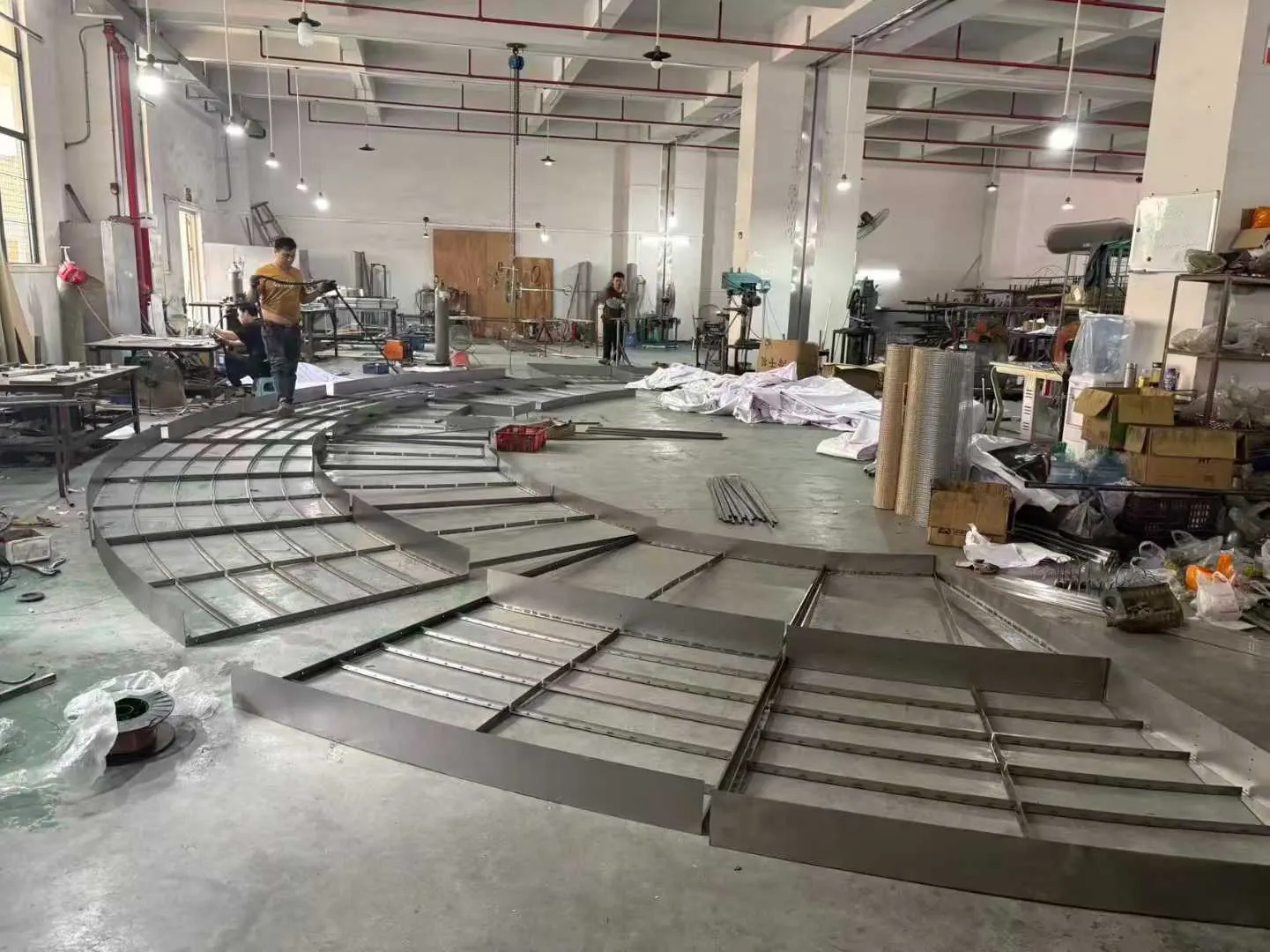
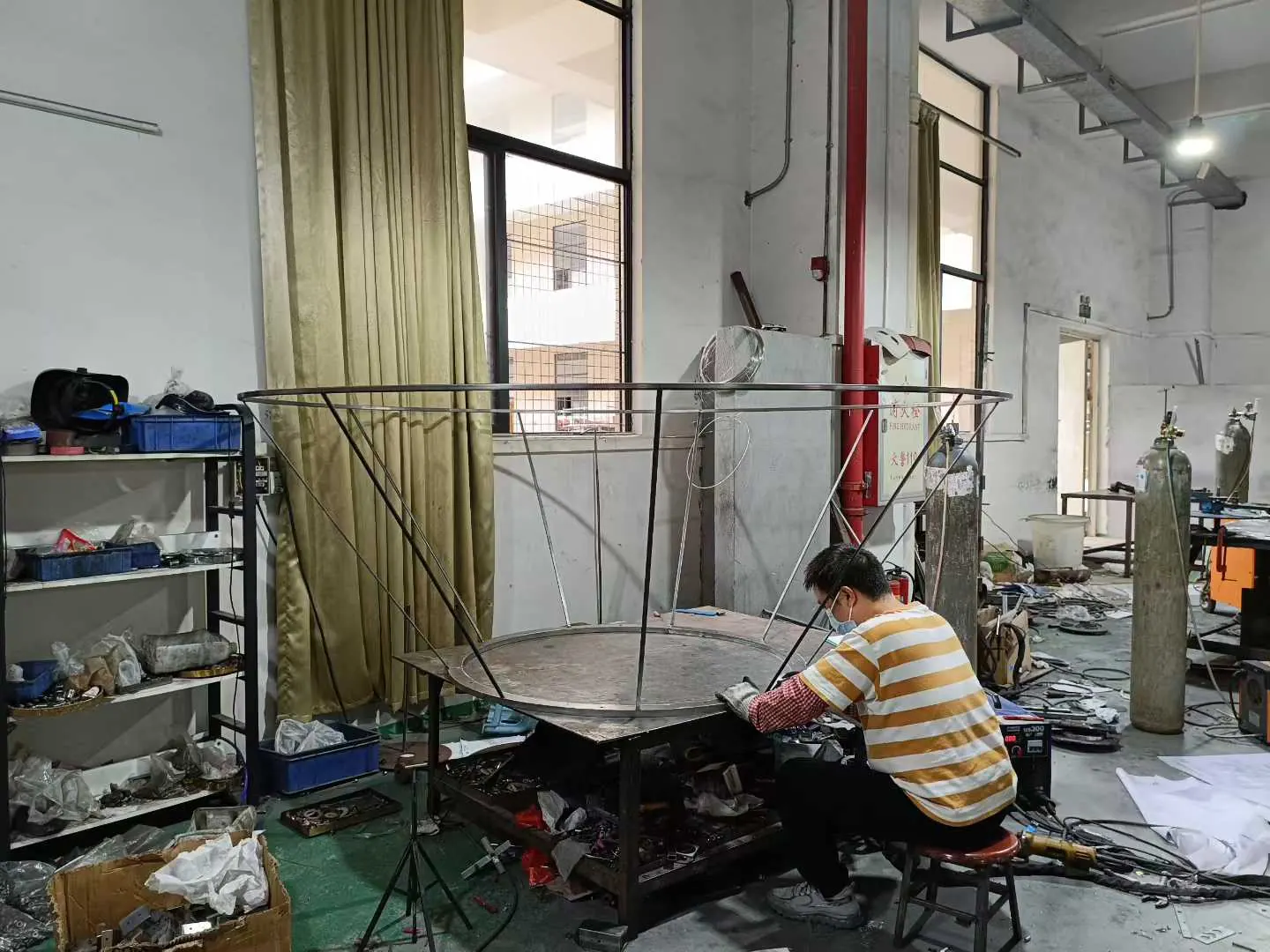
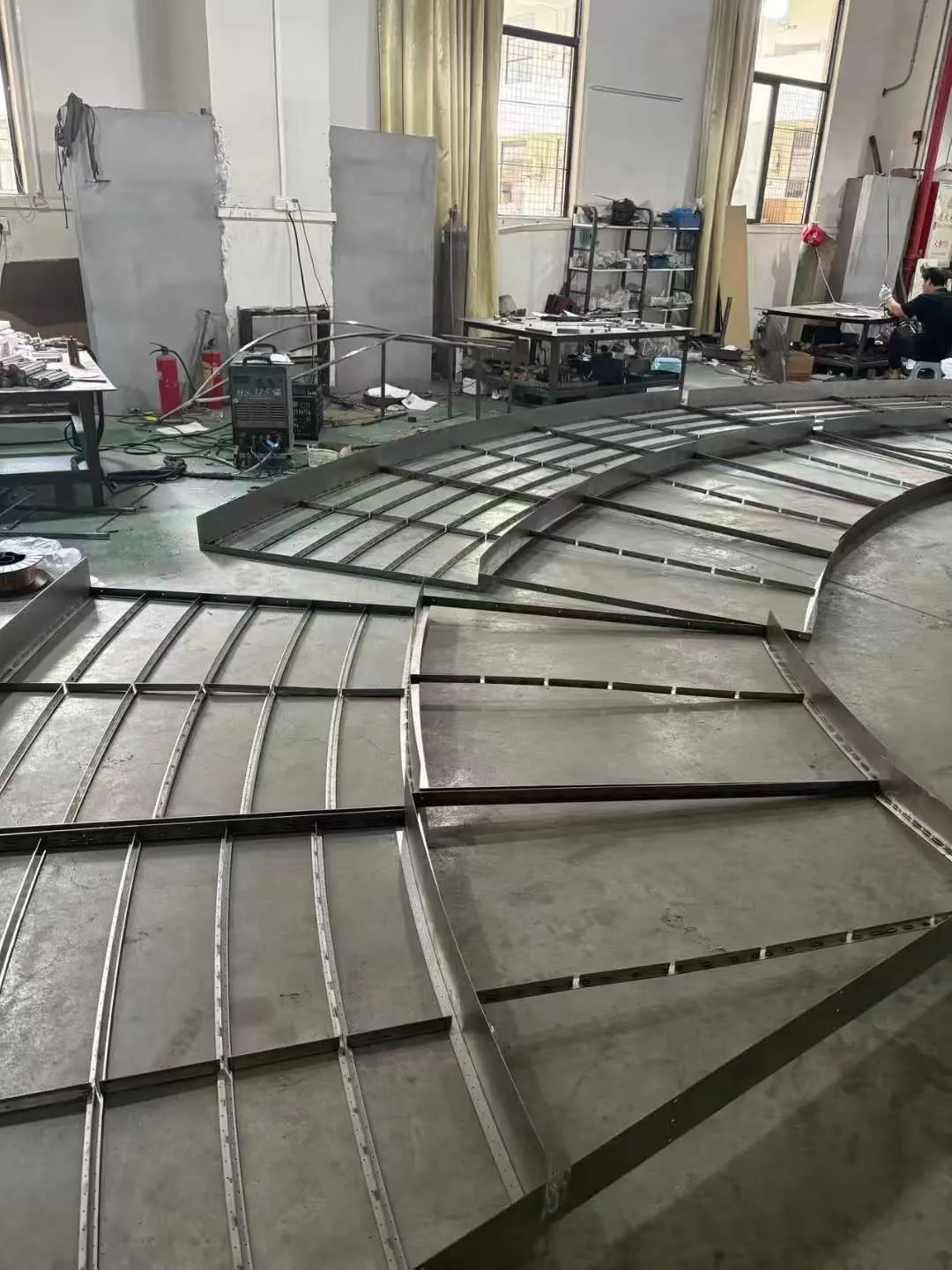
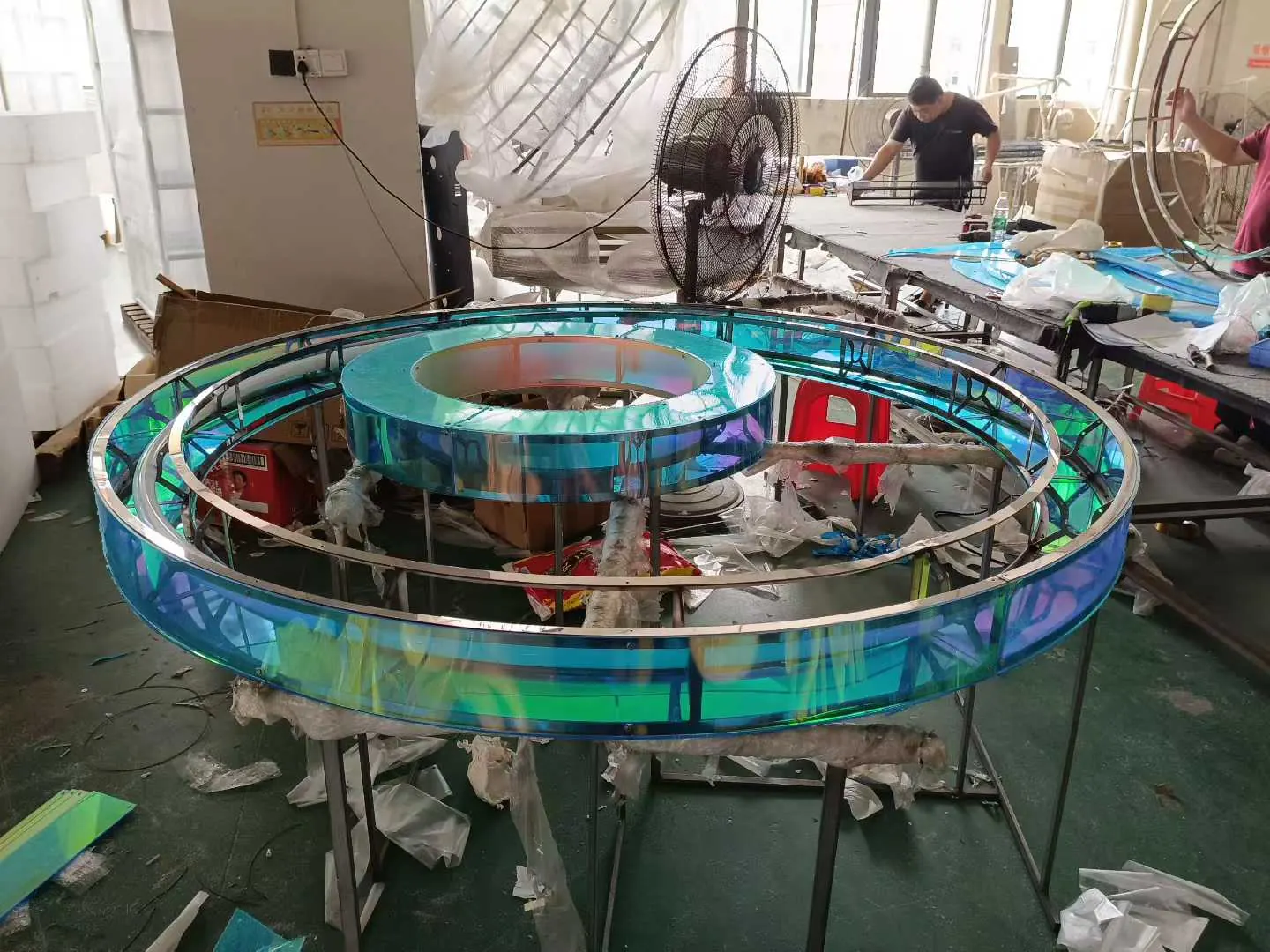
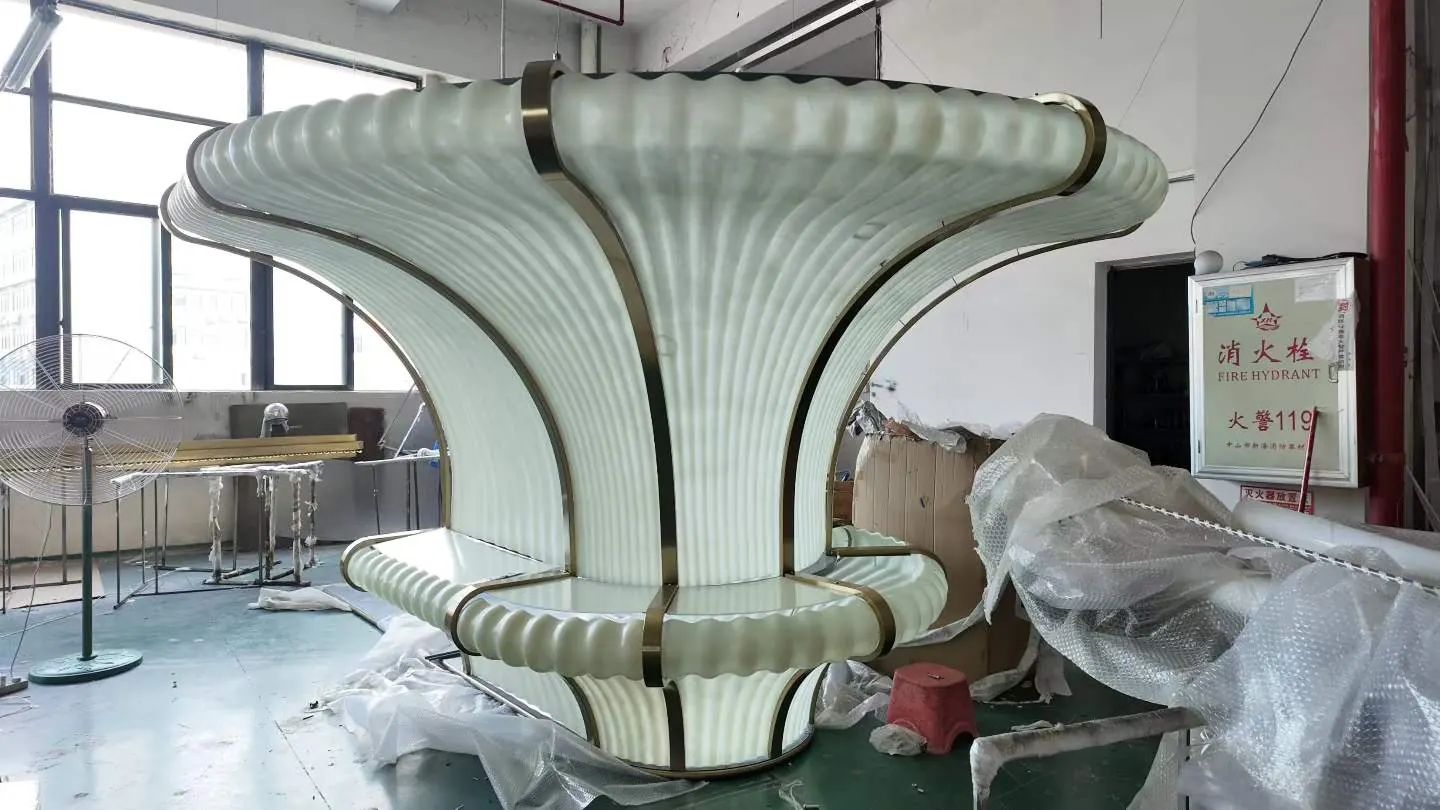
Our hardware department cuts, rolls and welds the steel frames. Rings, domes, arcs and tree forms are made on the floor at full size.
Large frames in sections
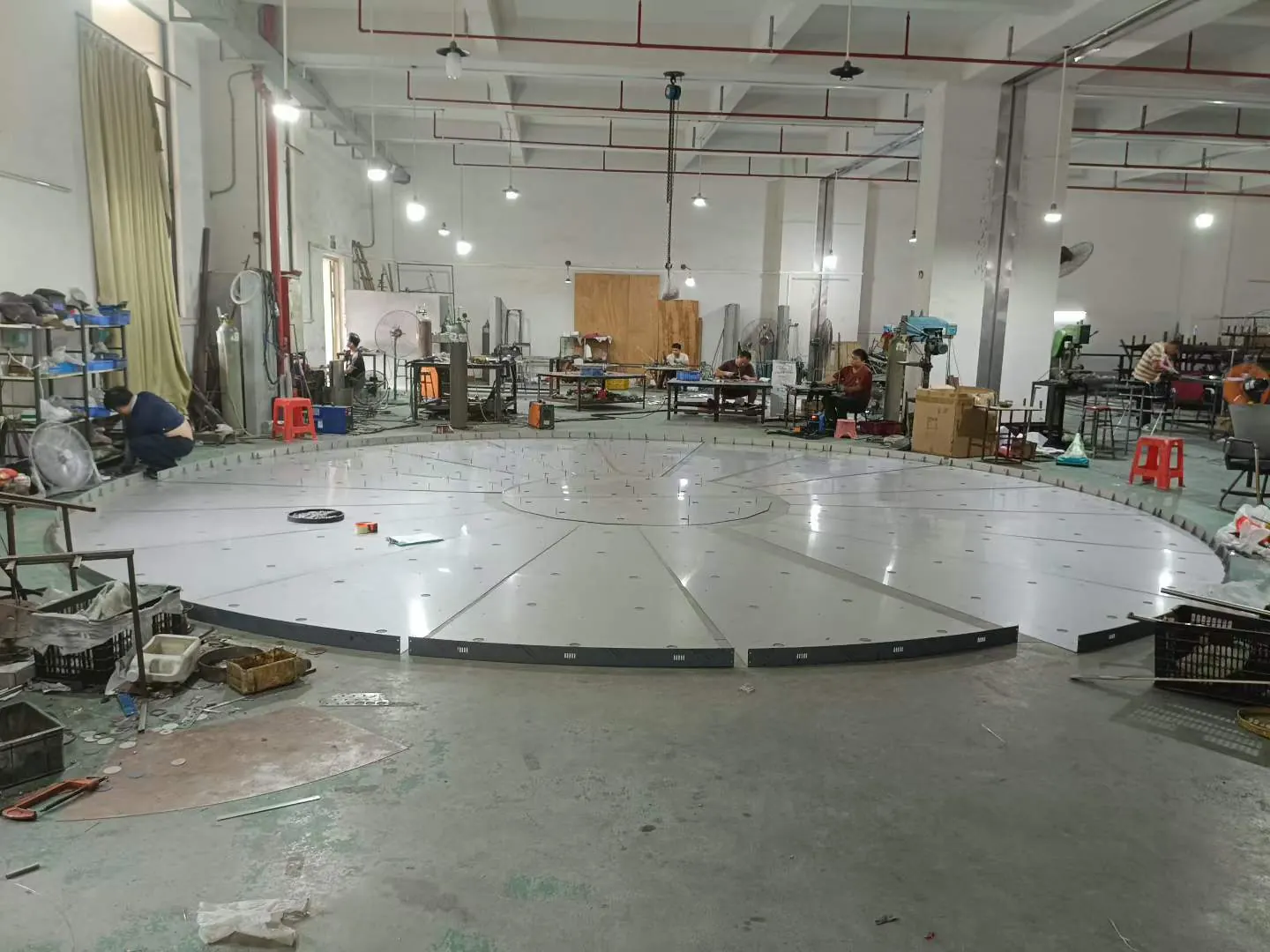
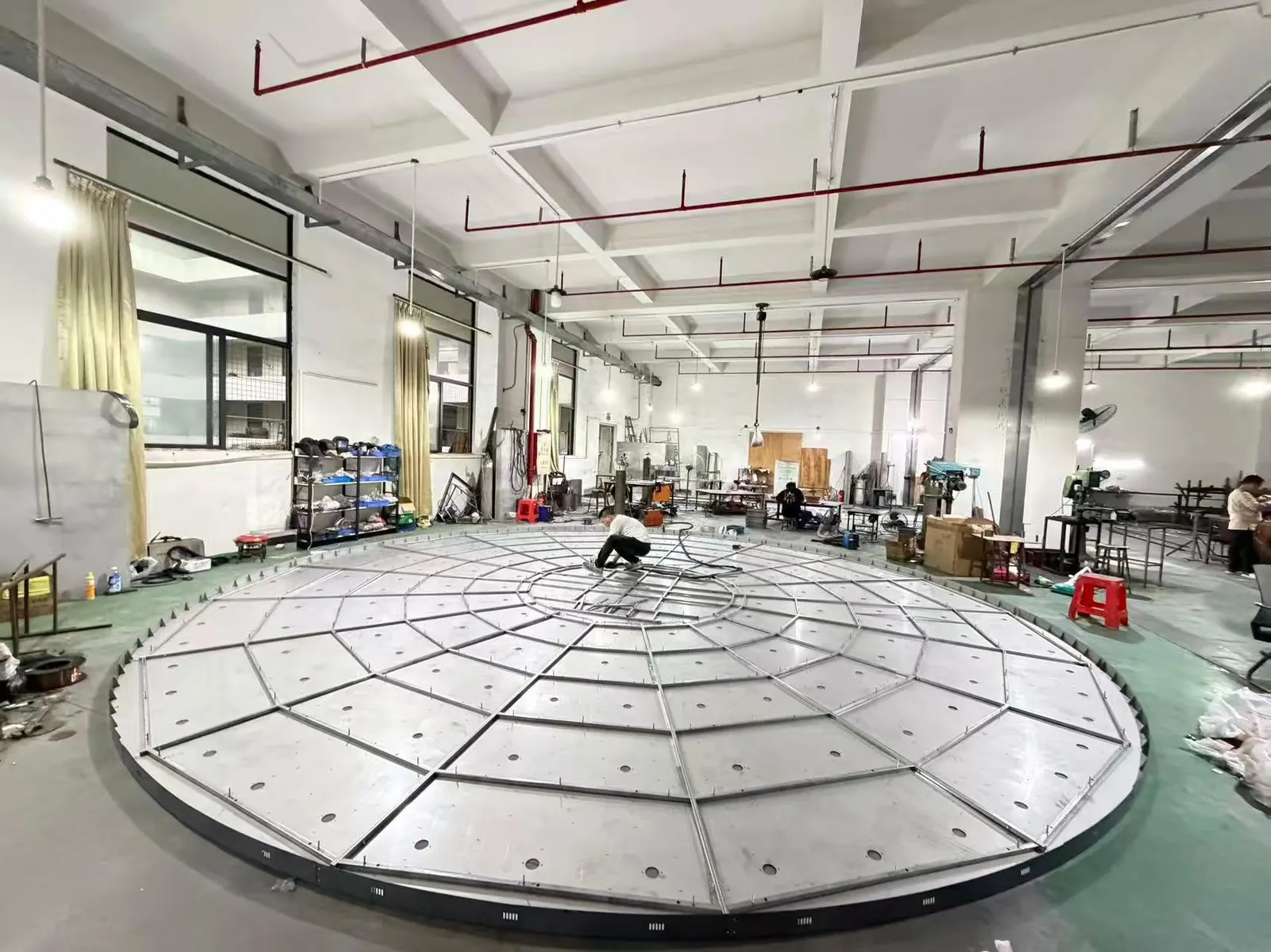
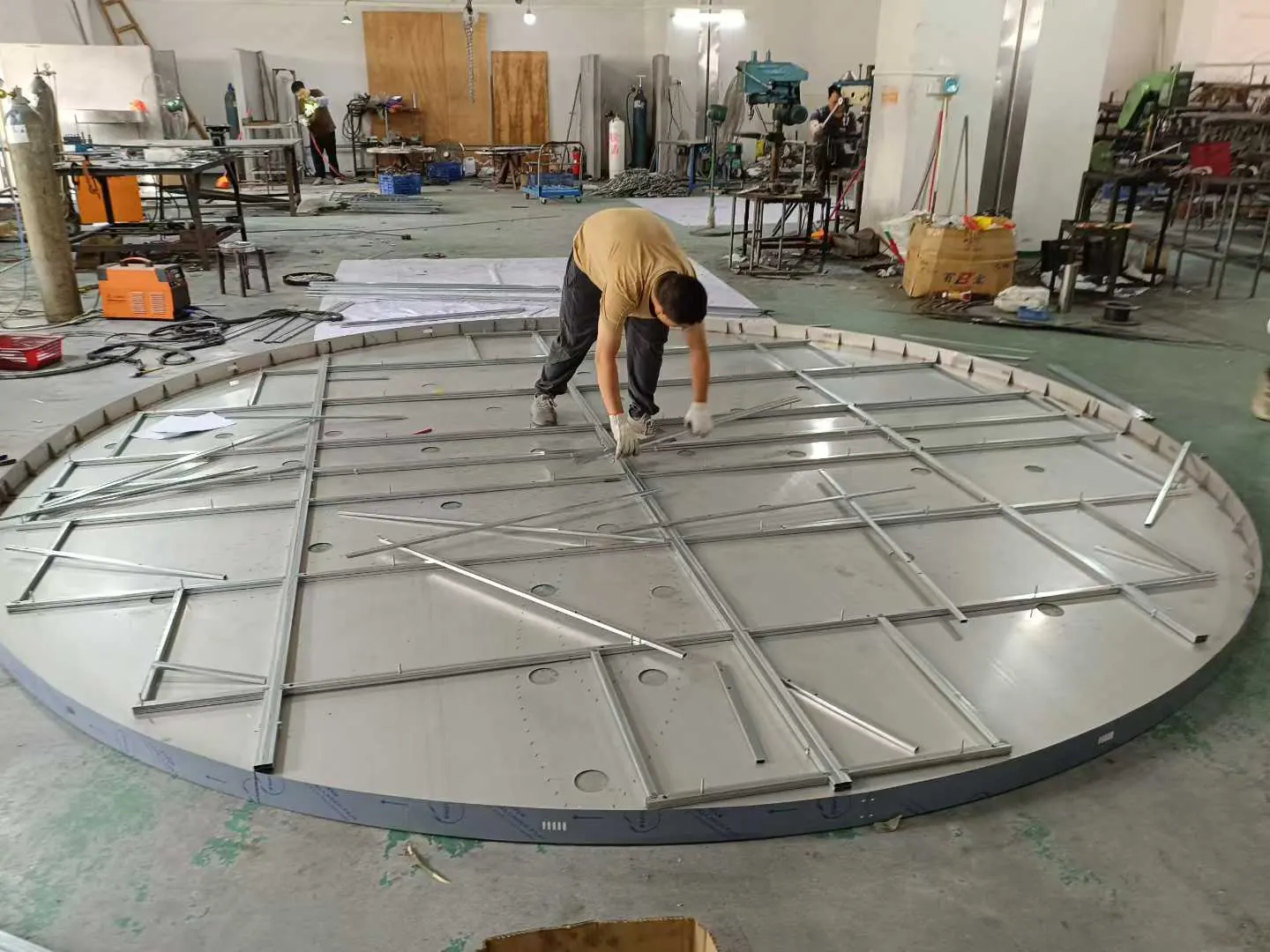
Frames too big for a crate are built in sections. The 8m frame in the photo was laid out complete on the floor to check the fit before it was split for shipping.
Dressing and wiring
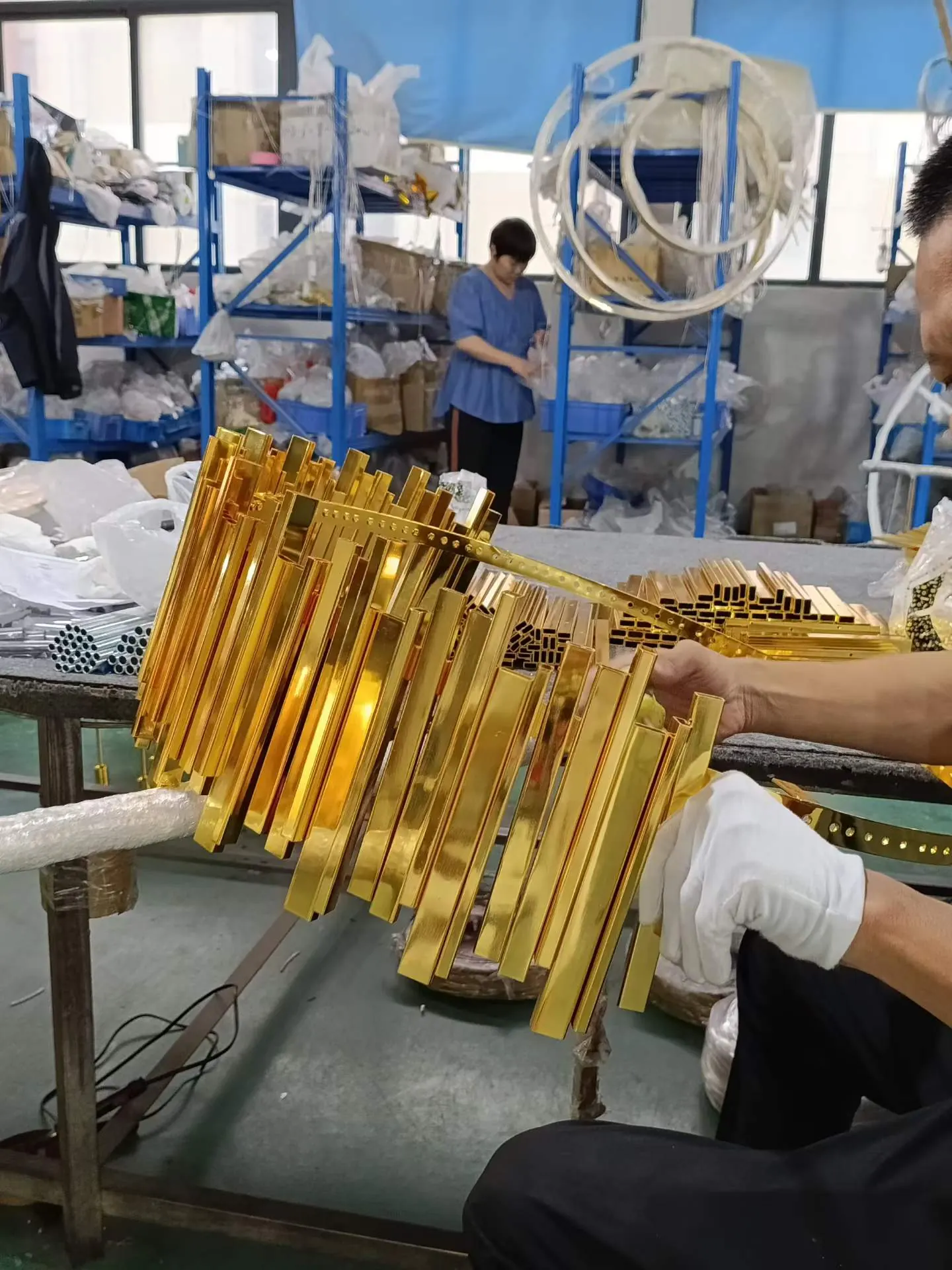
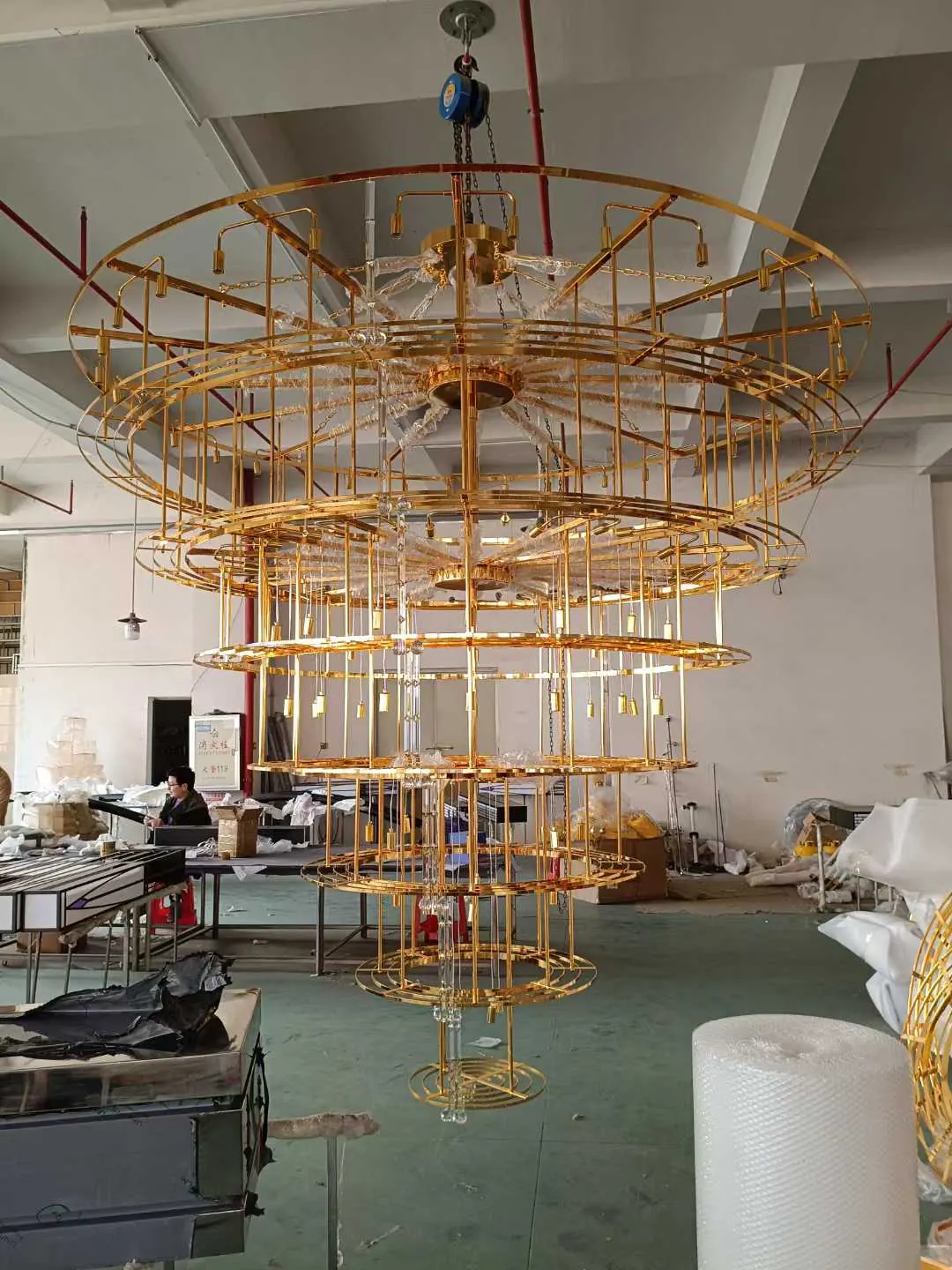
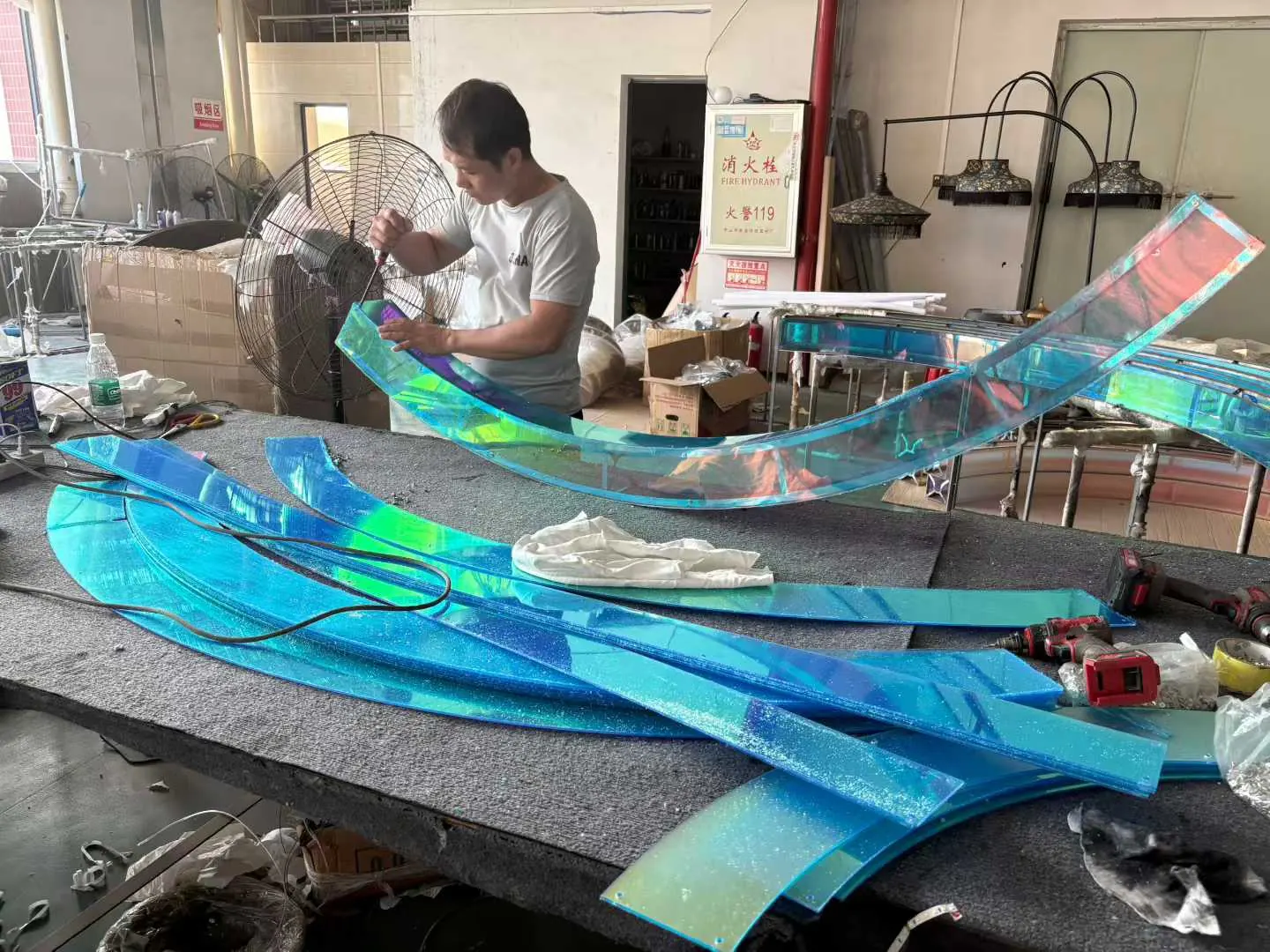
Crystal, glass, resin or acrylic parts are fitted by hand, and LEDs and drivers are wired and tested on the frame.

Which processes do we do in-house?
We draw every shop drawing, form and weld the steel frames, mirror-polish stainless steel, cut and polish acrylic, and run every lit trial in our own factory. Plating, paint, resin casting and art glass come from specialist partners, and crystal and LED components are bought finished. Every part comes back to us before the trial.
| Process | Who does it | Notes |
|---|---|---|
| Shop drawings | In-house | Drawn here before any metal is cut |
| Steel cutting, bending and welding | In-house | Our hardware department |
| Mirror polishing of stainless steel | In-house | |
| Acrylic CNC, laser cutting, bending and polishing | In-house | Diamond and flame polishing for clear, faceted edges |
| Full lit trial assembly | In-house | Every order, before packing |
| Gold plating and PVD finishes | Specialist partner | |
| Baked paint and powder coating | Specialist partner | |
| Resin casting for faux alabaster | Specialist partner | |
| Hand-blown, cast and kiln-formed glass | Specialist glassworks | Sampled in your colors first |
| Cut crystal | Bought finished | For example K9 crystal strips |
| LED strips and drivers | Bought finished | Fitted and wired on the frame here |
| Crates and flight cases | In-house and partners | Depends on the case type |
We can also hide joints and wiring inside the frame, which matters for sculptural pieces that are seen from every side or taken apart and rebuilt.


Do you make soldered brass and copper lamps?
Yes. Alongside welded steel frames we make soldered brass and copper lamps: domes, bowls and cage globes whose metal ribs are soldered by hand around white glass panels. Soldering suits smaller, finer frames where a weld seam would show, and it gives a clean metal line that reads well close up in dining rooms and suites.


Which chandelier materials do we work with?
Crystal parts are clear glass cut with facets, so they split light into sharp points of color. Traditional lead crystal adds lead oxide for extra sparkle; K9 crystal, which we use for our spiral strips, is a clear optical glass without lead. Art glass is not faceted: it is hand-blown, cast or kiln-formed, and gives a softer glow.
The choice changes the look more than the frame does. Faceted crystal reads best in a room with focused light, while hand-blown and cast glass suits softer, warmer schemes. See the hand-blown and cast art glass range for examples, or our full guide to crystal vs glass chandeliers.
Why do we trial-assemble every order?
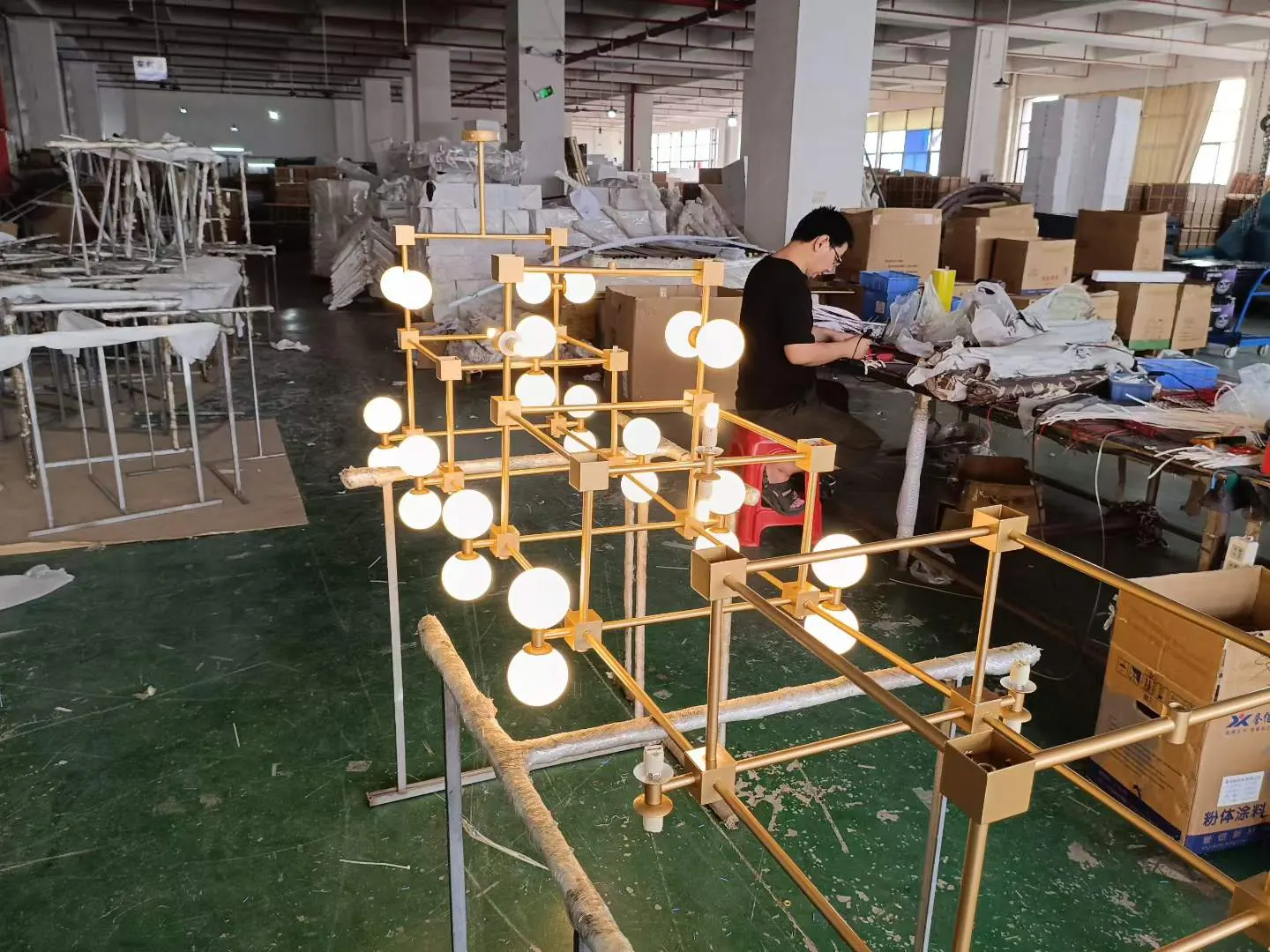
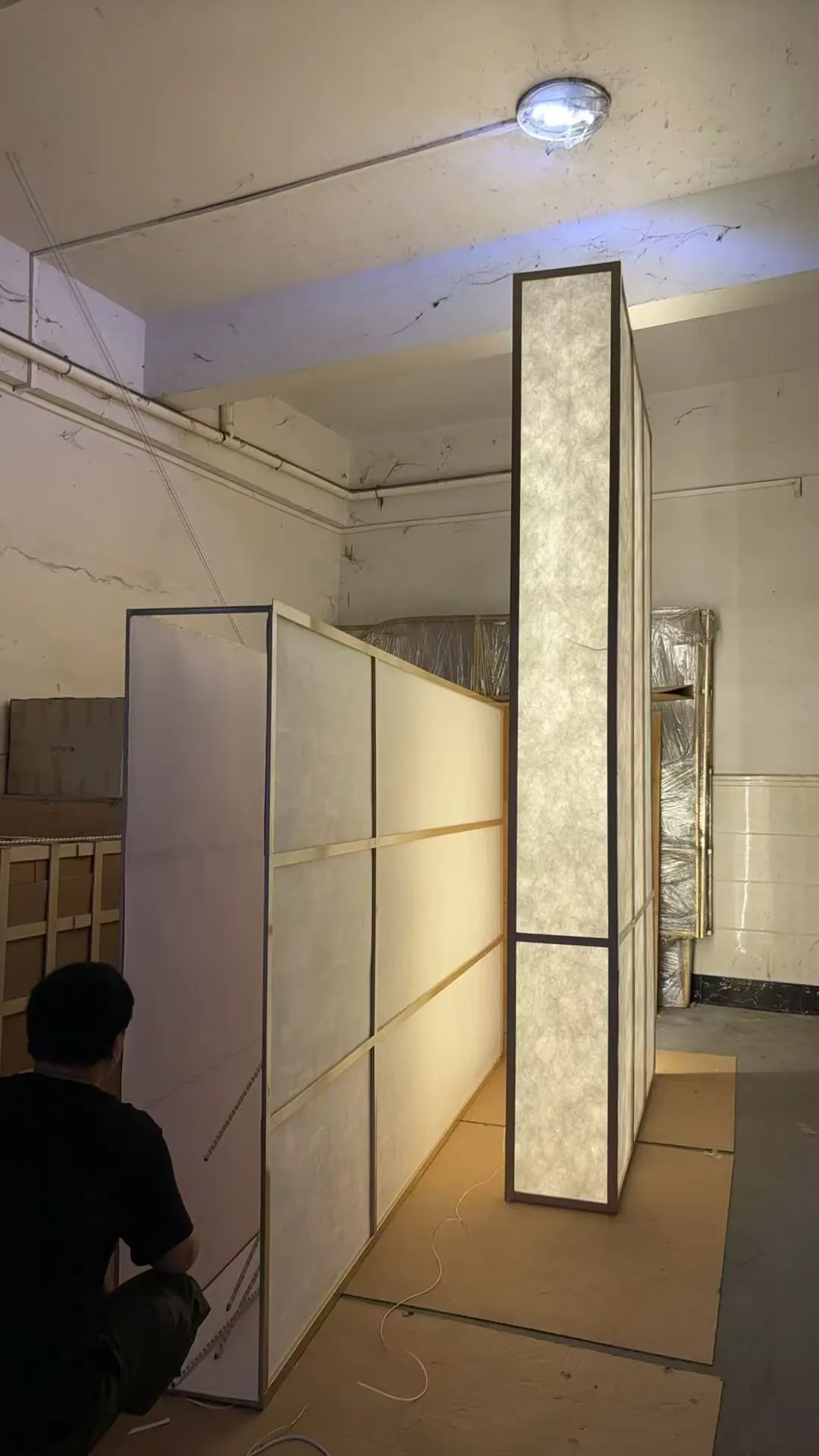
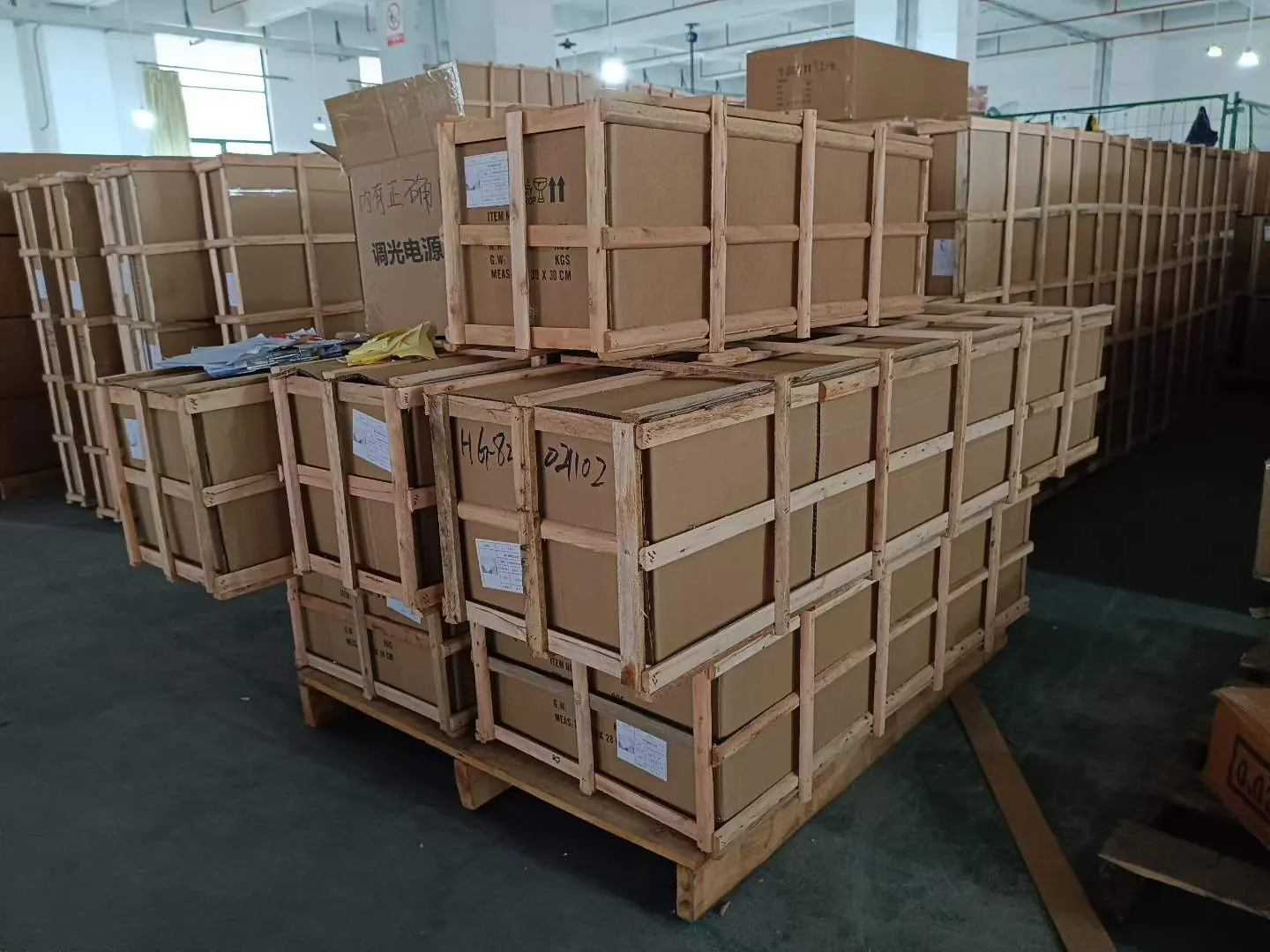
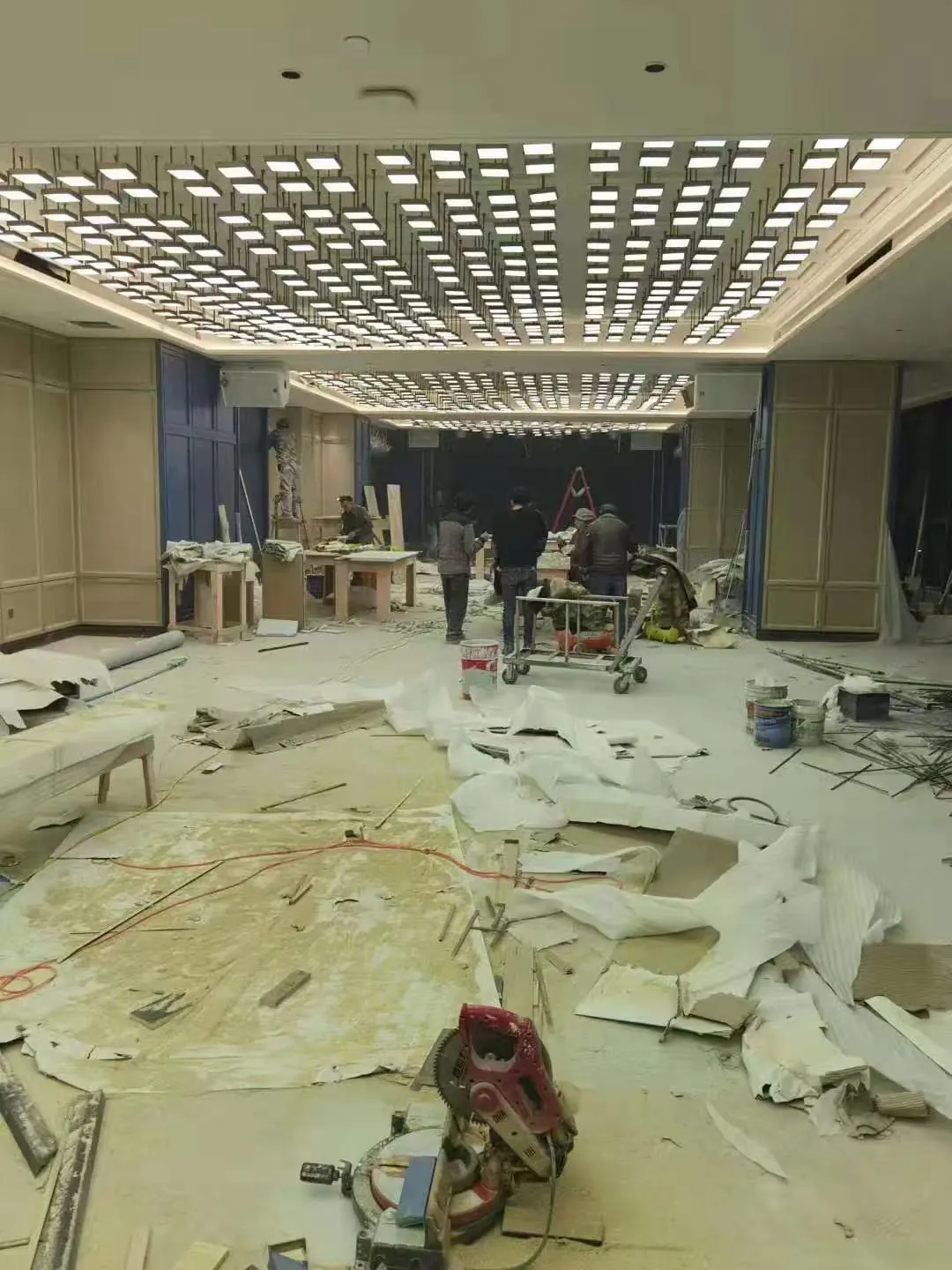
Because problems are cheap to fix in the factory and expensive under a hotel ceiling. During trial assembly we hang every part, switch the lights on and check the shape, spacing and wiring. You receive photos or video of the lit fixture, and each part is labeled against that trial before it is packed.
The video shows a trial assembly, filmed before packing.

Can you visit the factory or showroom?
Yes. Our factory and showroom are in Shunde District, Foshan, in Guangdong province, China. Clients can visit to see finished samples in the showroom and fixtures on trial in the factory. A visit during trial assembly is the best time to approve a large order, because you see the real fixture lit at full size.
The same checks apply to every range, from tiered crystal chandeliers to acrylic and LED feature lights.
See the finished results in our venue chandelier projects, or read what a factory needs from you before you send a brief.
Send us your ceiling plan
Share a drawing, photo or sketch with the ceiling height and room size. We come back with questions, design options and a quote.