
Crystal vs glass chandeliers: how to choose for a hotel or banquet hall
Crystal vs glass chandeliers compared on sparkle, weight, color, cleaning and cost, from a factory that builds both for venues.
Key points
- Most modern chandelier crystal is K9, a lead-free optical glass with a refractive index of about 1.517 (Schott N-BK7 data sheet), about the same as ordinary window glass. Its sparkle comes from clarity and precise cutting, not from bending light more.
- In lighting, crystal is a kind of glass, not mineral crystal. Traditional lead crystal must contain at least 24% lead oxide under EU Council Directive 69/493/EEC (1969).
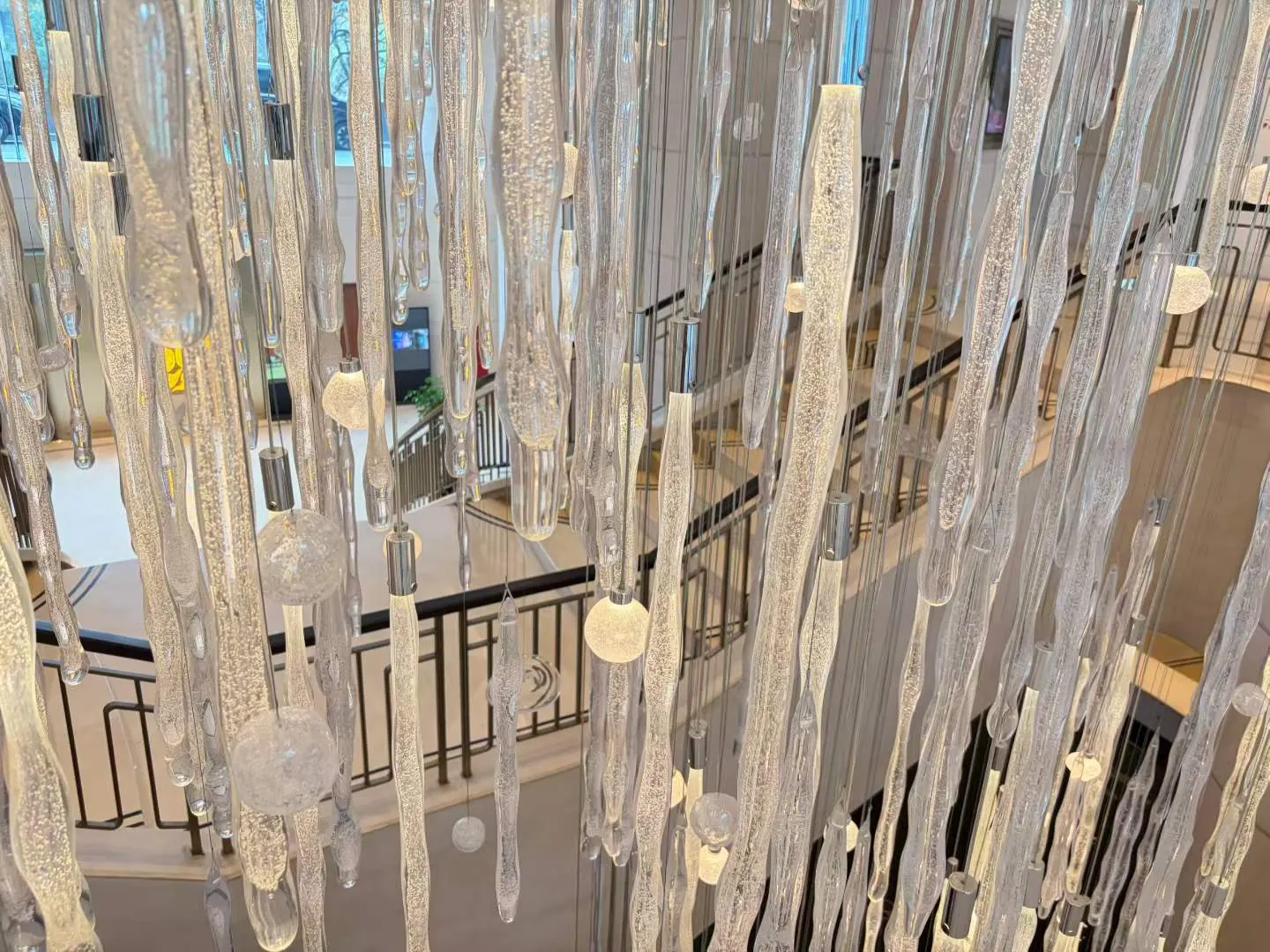
- Art glass chandeliers use blown, cast or kiln-formed shapes for color and a softer glow, so they suit warm or colorful schemes better than faceted crystal does.
- For venues, the choice usually comes down to how the room is lit, who photographs it and how often the fixture can be cleaned.
What is the difference between a crystal and a glass chandelier?
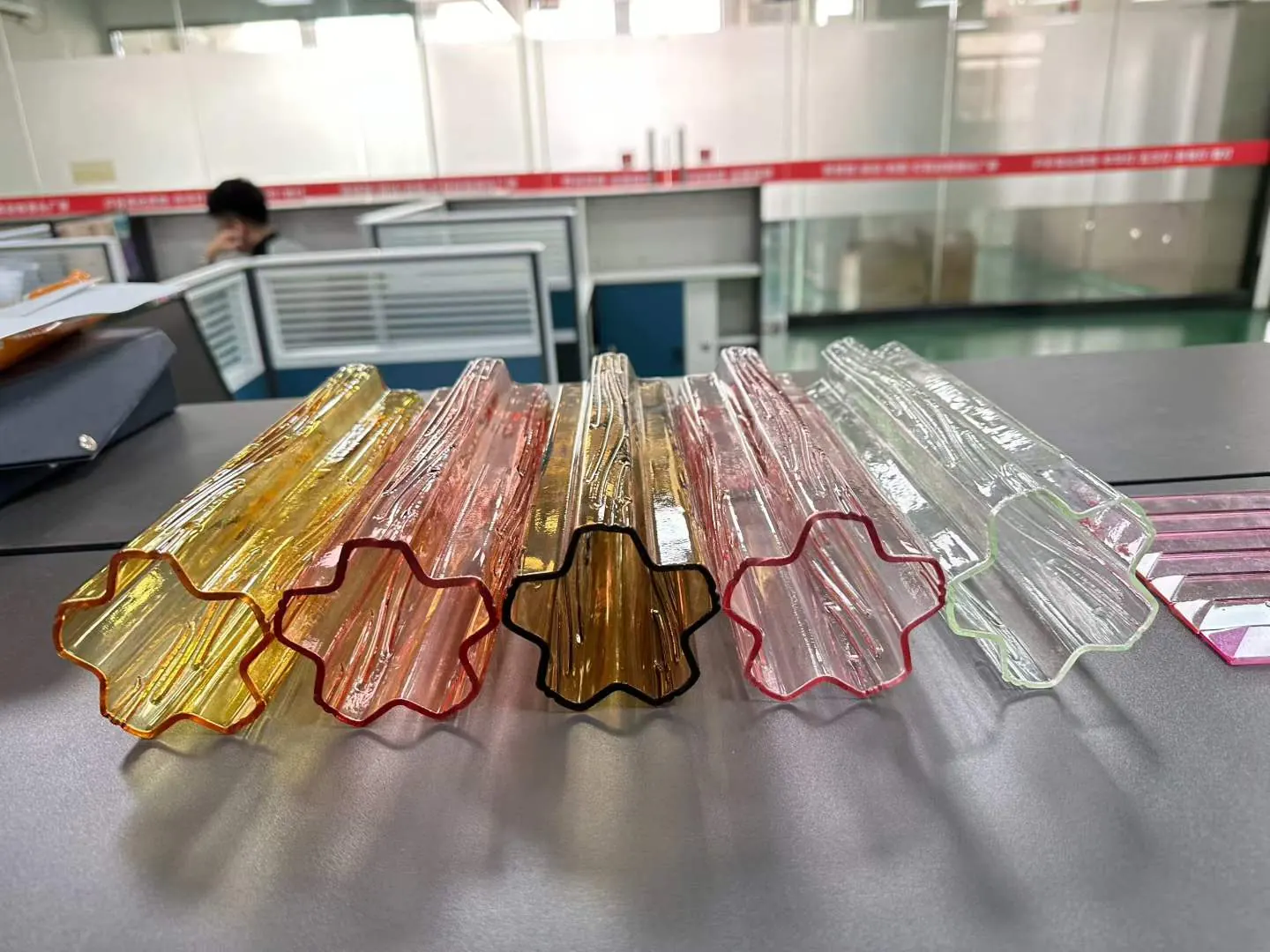
A crystal chandelier is dressed with clear pieces cut into facets, so each one splits light into sharp points and small flashes of color. A glass chandelier uses blown, cast or kiln-formed glass shapes that diffuse light into a softer glow. Both are glass; the difference is clarity, cutting and how the light leaves the piece.
That is why the two read so differently in the same room. Faceted crystal needs focused light to sparkle and looks busy up close. Art glass shows its color and texture even under soft light, which is why we use it for colored art glass chandeliers in atriums and stairwells.

Are crystal chandeliers actually made of crystal?
No. Chandelier crystal is glass, not mineral crystal. Traditional lead crystal is glass with added lead oxide, while most crystal used in chandeliers today is K9, a clear lead-free optical glass. K9 is the Chinese grade comparable to borosilicate crown glass such as Schott N-BK7, and it is what we use for our spiral crystal strips.
The European definition is precise. Council Directive 69/493/EEC (1969) sets lead crystal at no less than 24% lead oxide and full lead crystal at no less than 30%, with a refractive index of at least 1.545. Schott’s data sheet for N-BK7 gives a refractive index of about 1.517 and a density of 2.51 g/cm3. So a K9 piece does not bend light more than ordinary glass; its sparkle comes from clarity, few bubbles and precise cutting.
| Material | What it is | Where it suits a venue |
|---|---|---|
| Lead crystal | Glass with 24% or more lead oxide | Heritage pieces where weight and cost are acceptable |
| K9 crystal | Clear lead-free optical glass, cut and polished | Most modern crystal chandeliers, strips and prisms |
| Art glass | Hand-blown, cast or kiln-formed glass shapes | Color, texture and sculptural pieces in atriums and stairwells |
How can you tell crystal from glass in a chandelier?
Look at clarity, cutting and weight. Crystal pieces are very clear, with sharp, polished facets that split light into small rainbows, while ordinary glass pieces often have softer edges, a faint green tint or small bubbles. Lead crystal also feels heavier and rings when tapped gently. K9 crystal is lead-free, so check clarity and cutting instead.
If you are buying, ask the factory to state the material of each part in writing, for example K9 crystal strips or hand-blown glass shades, and check it against samples before production.
Which sparkles more, crystal or glass?
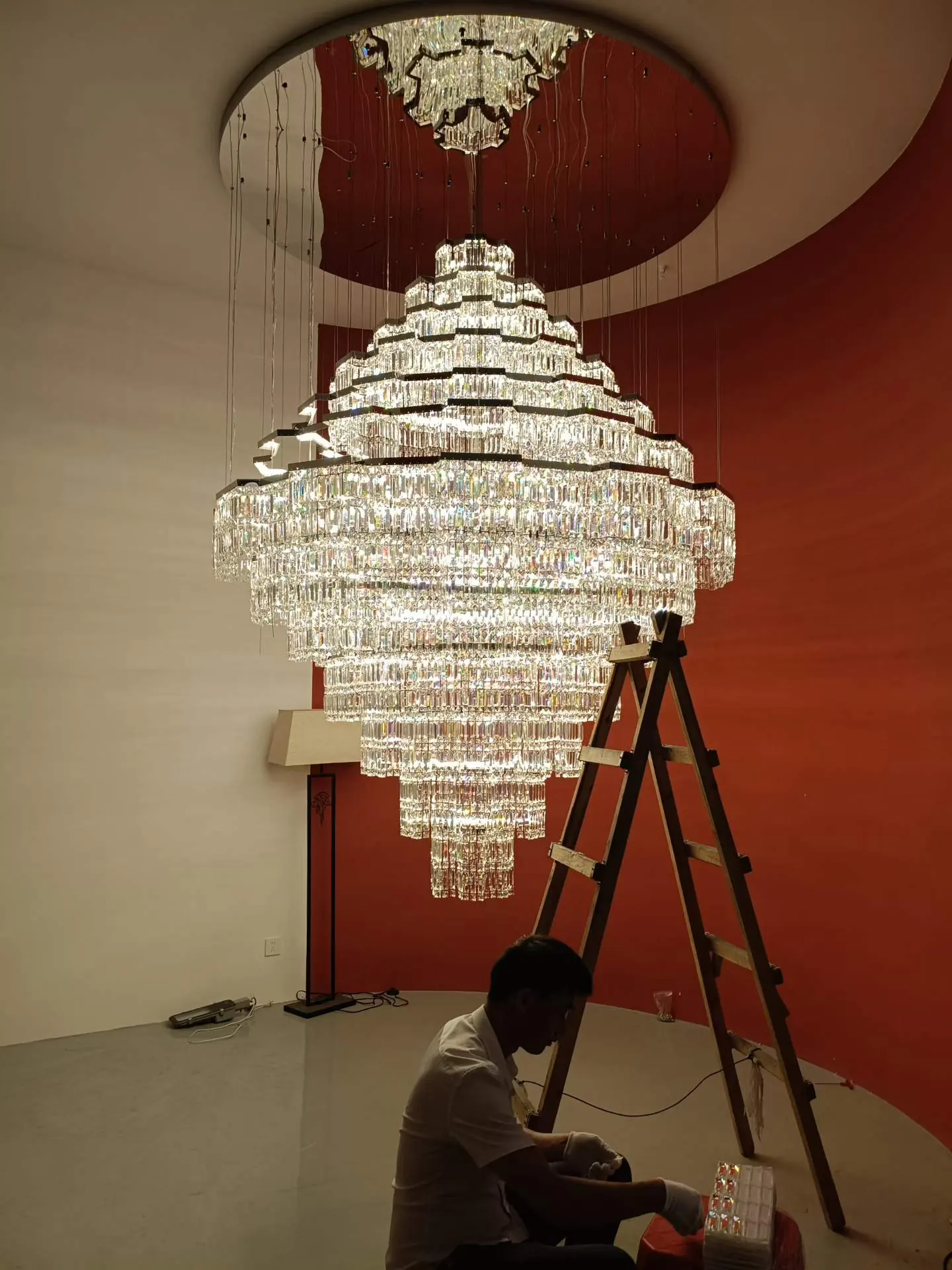
Faceted crystal sparkles more, because each cut face reflects and splits light into separate points that move as guests walk past. Art glass gives a steadier, softer light and stronger color. In a wedding hall filmed from the stage, crystal reads well on camera; in a lobby lounge, softer glass is often easier on the eye.
Light sources matter as much as the material. Small, bright point sources bring out crystal facets, while diffused LEDs flatten them. We check this on every order in the factory trial assembly, with the specified lights switched on.
How do crystal and glass compare on weight?
Weight depends on how much material hangs on the frame more than on the label. A large crystal chandelier carries hundreds or thousands of cut pieces, and dense lead crystal is heavier still, so the frame and fixing points must be sized for it. Glass art pieces vary from light drops to heavy cast shapes.
Whatever the material, ask the factory for the estimated weight of each section and pass it to your structural engineer. Our guide to large chandelier installation covers fixing points, lifting and the problems we see on site.
Are crystal chandeliers more expensive than glass?
Usually, yes. A crystal chandelier needs many precisely cut and polished pieces, and lead crystal adds material cost, so it tends to cost more than a glass fixture of the same size. Art glass can match or exceed crystal when pieces are hand-blown or cast in custom colors, because each piece takes skilled handwork.
Piece count matters more than the label. A dense crystal fixture with thousands of strips costs more than a sparse one, whatever the material.
Which is easier to clean and maintain in a venue?
Glass is usually easier. A crystal chandelier has many small cut pieces that show dust and fingerprints and lose sparkle when dirty, so venues clean them on a fixed schedule. Larger glass shapes have fewer pieces to handle, and frosted or colored glass hides light dust better than clear crystal does.
Plan access before choosing. In a high atrium, a fixture with thousands of crystal strips needs a lift or scaffold for every cleaning, while a glass piece with fewer, larger parts takes less time aloft.
Which suits a banquet hall, and which suits a hotel lobby?
Banquet and wedding halls usually choose crystal, because sparkle reads well under stage lighting and on wedding photos and video. Hotel lobbies use both: crystal for a classic or grand entrance, and art glass when the interior calls for color, texture or a sculptural piece that becomes part of the hotel’s identity.
What about faux alabaster and acrylic?
They solve different problems. Faux alabaster is resin made to look like stone, lit from within for a warm, even glow at a fraction of the weight of real alabaster. Acrylic is light and easy to shape, so it suits long ribbons, cubes and grids lit by LED where glass would be too heavy or fragile.
See our faux alabaster lighting and acrylic and LED feature lighting for pieces we have made.
Can crystal and glass colors be customized?
Yes. Art glass can be made in almost any color, and we match glass color to the interior designer’s samples before production. Crystal is usually clear, but colored crystal such as teal or amber is available for accents. Metal finishes on the frame, from gold to black, are chosen separately.
Ready to compare options for your space? Our custom crystal chandeliers page shows the crystal styles we build.
Send us your ceiling plan
Share a drawing, photo or sketch with the ceiling height and room size. We come back with questions, design options and a quote.