
How large chandeliers are installed in banquet halls and hotel lobbies
A practical guide to large chandelier installation in venues: what the site prepares, how labeled sections go up and what usually goes wrong.
Key points
- A large venue chandelier hangs from the building structure, never from a standard ceiling box, and the fixing points must be signed off by the project’s structural engineer.
- The fixture arrives in labeled sections that match a lit trial assembly in the factory, so the site crew rebuilds a fixture that has already worked once.
- Most delays on site come from the building, not the fixture: fixing points off the drawing, an unfinished ceiling or a lift that cannot reach.
What does a venue need ready before a large chandelier arrives?
Before a large chandelier arrives, the venue needs fixing points approved by its structural engineer, power and dimming wiring at each point, a finished ceiling, a lift or scaffold that reaches the working height, and a clear floor area for assembly. Confirm each item against the shop drawing before the shipping date is set.
| Item | Who arranges it | When to confirm |
|---|---|---|
| Fixing points in the structure | Venue’s structural engineer | Before the shop drawing is approved |
| Power and dimming at each point | Local licensed electrician | Before the ceiling is closed |
| Finished ceiling around the fixture | Main contractor | Before the installation date |
| Lift or scaffold to working height | Venue or contractor | When the shipping date is set |
| Clear floor for assembly | Venue | In the installation week |
How do you hang a chandelier from a 20 ft ceiling or higher?
Banquet halls and hotel atriums often have ceilings well above 20 ft (about 6m). There, a large chandelier is assembled in sections, on the floor or on a scaffold platform, then raised to fixing points in the structure with a hoist or lift. Each section is hung and connected before the crystal or glass parts go on.
Weight is the reason for this order of work. The US National Electrical Code (NFPA 70, 2023 edition, section 314.27(A)(2)) allows a ceiling outlet box to carry a luminaire of up to 50 lb (23 kg); anything heavier must be supported independently of the box unless the box is listed for more. A venue chandelier is usually far above that, so it hangs from steel wires or rods fixed to the slab, beams or a dedicated frame. Our largest frame shown on this site is 8m across.
Should a large chandelier have a safety cable?
Yes. A large chandelier should have secondary support, such as a safety cable fixed to the structure independently of the main suspension, so a single failed fixing cannot bring it down. Agree the safety support with the structural engineer and show it on the hanging layout in the shop drawing before production starts.
Confirm with us how secondary support is handled on your fixture, and note it in the installation checklist your site team uses.
How are labeled sections matched to the factory trial assembly?
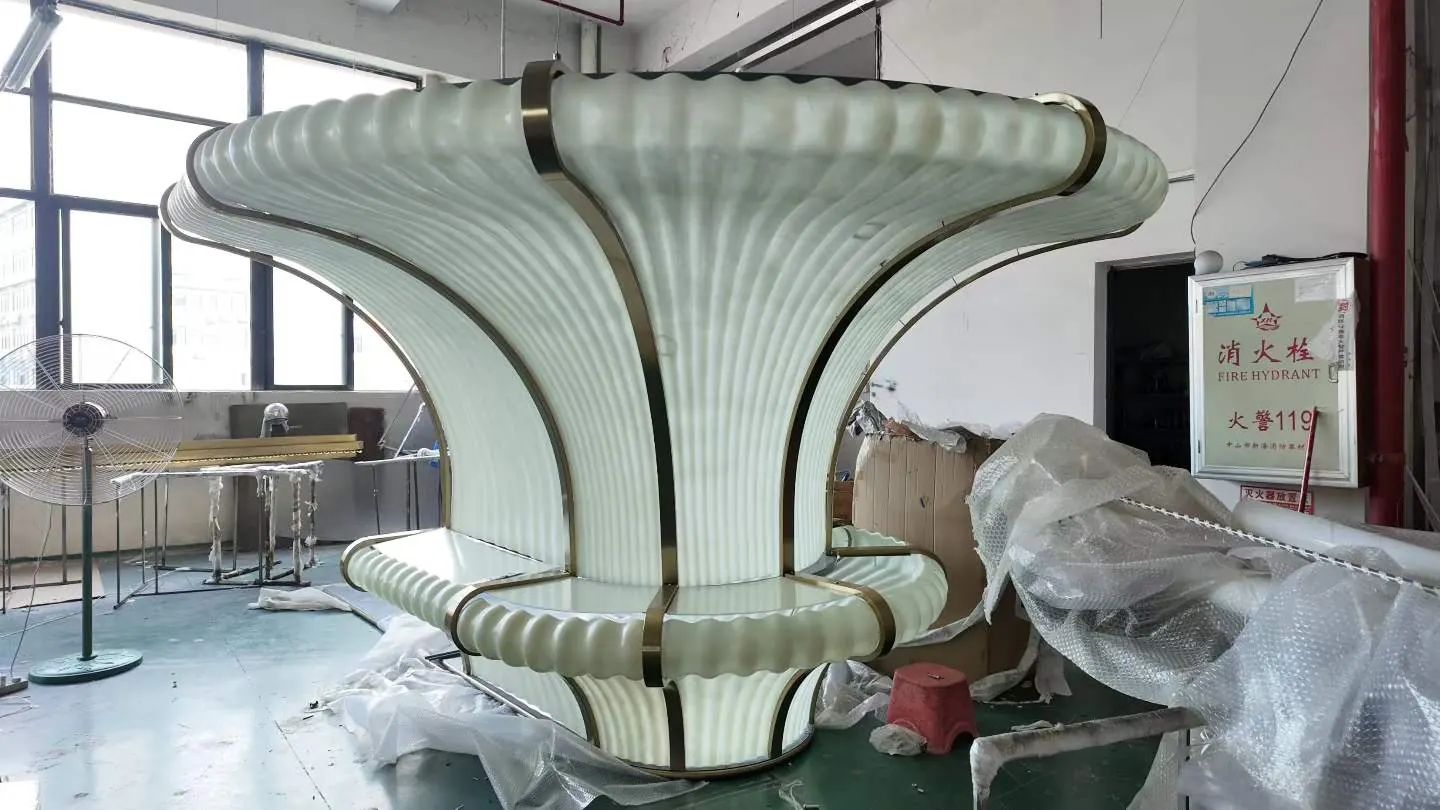
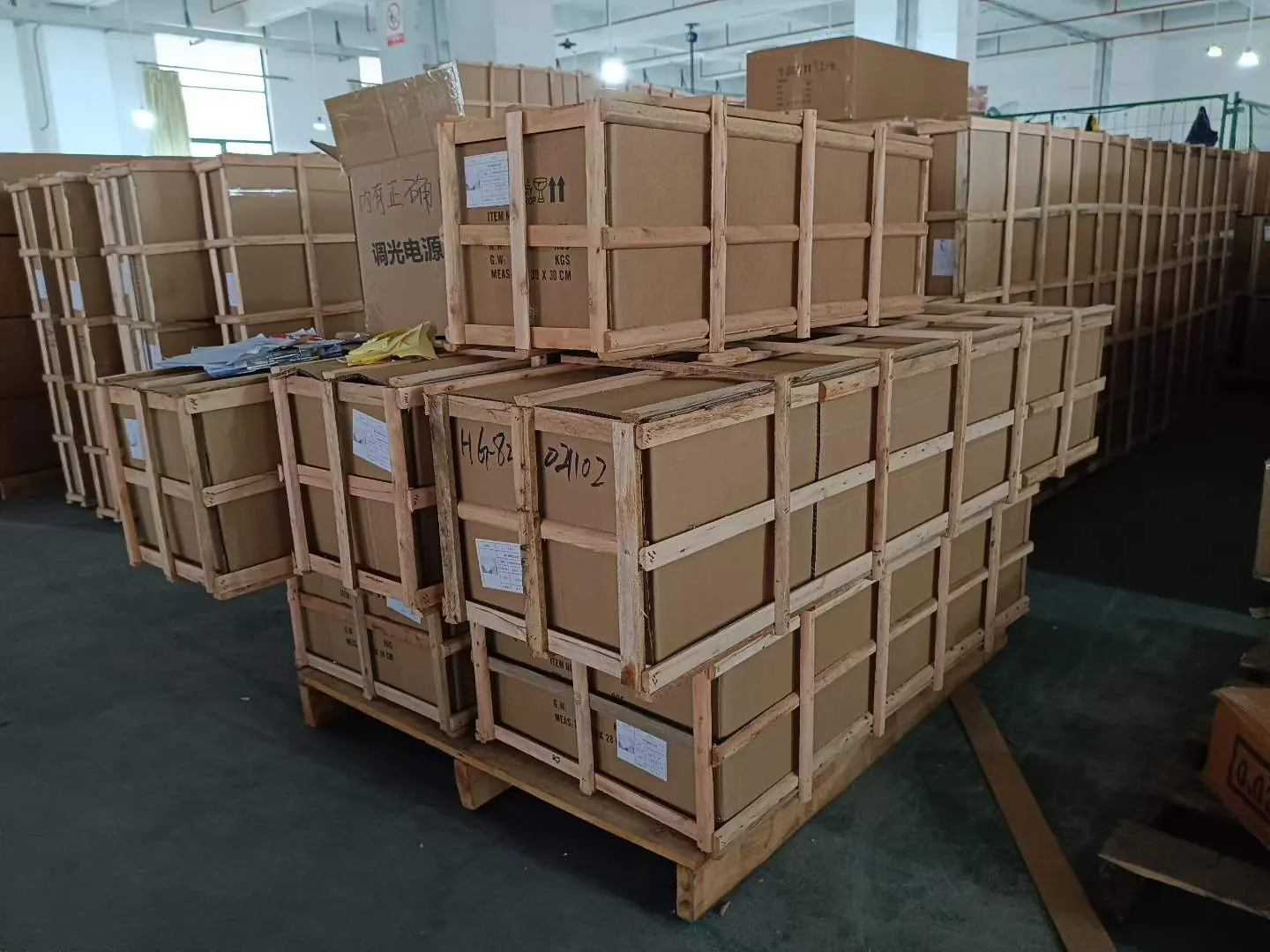
Every order is trial-assembled in our factory with the lights on and photographed. Each section and hanging part is then labeled against that trial before it is packed, so the site crew can rebuild the same layout. The trial photos and video travel with the shipment as the reference for installation.
What happens on installation day?
On installation day the crew unpacks the crates in section order, checks parts against the labels, assembles the frame, raises it to the fixing points and secures it. The electrician then connects power and dimming, the crew hangs the crystal or glass parts, and the fixture is lit, leveled and adjusted to the approved height.
- Unpack in section order and check parts against the labels and trial photos.
- Assemble the frame sections on the floor or on the scaffold platform.
- Raise the frame and fix it to the approved points with the specified wires or rods.
- Connect the supply, drivers and dimming through the local electrician.
- Hang the crystal, glass or acrylic parts in numbered order.
- Switch on, level the fixture and set the final drop height.
Do you need a licensed electrician to install a chandelier?
Yes. In a venue, the supply connection and the dimming system should be wired by a licensed electrician who works to local code. The factory supplies the wiring diagram, driver data and dimming protocol for each fixture. Structural loads are a separate question, and only a qualified local engineer can approve them for your building.
We do not publish load figures for other people’s buildings. What we provide is the estimated weight of each section and the number of hanging points, so the engineer can check them against the structure.
What goes wrong most often on site, and how is it avoided?
The problems our installation team meets most often are fixing points that do not match the drawing, ceilings that are not finished, voltage or driver mismatches, structures that need reinforcing, lifts that cannot reach, parts broken in transit, final leveling and dimming wiring that local electricians have not seen before. Most can be prevented before shipping.
| Problem on site | Why it happens | How to avoid it |
|---|---|---|
| Fixing points do not match the drawing | Points were set out before the final layout | Mark the points from the approved shop drawing and send photos before shipping |
| Ceiling not finished | Fixture installation booked ahead of the ceiling works | Fix the installation date after the ceiling schedule is confirmed |
| Voltage or driver mismatch | Supply or dimming system changed after ordering | Confirm voltage, frequency and dimming protocol in writing before production |
| Structure needs reinforcing | Load checked late or not at all | Send section weights to the structural engineer at the drawing stage |
| Lift cannot reach or cannot enter | Working height or door size not checked | Check lift height and access route against the section drawing |
| Parts broken in transit | Glass and crystal are fragile on long routes | Pack spares with the order and list them in the packing list |
| Leveling and drop height | Ceilings are rarely perfectly level | Use adjustable wires or rods and set the height with the lights on |
| Dimming wiring unfamiliar to the electrician | Protocols such as DALI or DMX vary by project | Send the wiring diagram early and arrange remote or on-site guidance |
How much does it cost to install a large chandelier?
The cost of installing a large chandelier depends on the fixture’s weight and number of sections, the ceiling height and lifting equipment needed, any structural reinforcement, the electrical and dimming work, and whether the factory team travels to site. Ask for these as separate lines, because the lift and the reinforcement often cost more than the labor.
Get the structural and electrical items priced by local contractors early. They are the parts the factory cannot quote for you.
How is a large chandelier lowered for cleaning?
A large chandelier is either cleaned in place from a lift or scaffold, or lowered on a winch built into the ceiling. A winch costs more at the start but saves lift hire on every cleaning. Decide before the ceiling is built, because a winch needs space, power and a structural mounting above the fixture.
Our specification guide lists maintenance among the decisions to make before production.
Can the factory team join the installation abroad?
Yes. Our team can join the installation on site to hang, connect and light the fixtures with your local installers and electrician. We plan the visit after reviewing the shop drawing and photos of the fixing points, so the crew size and the number of days match the fixture and the site.
To plan an installation, collect the items in our guide on how to specify a custom chandelier, then send your ceiling plan for a quote. The production side, from steel frame to crate, is on the page about how custom chandeliers are made.
Send us your ceiling plan
Share a drawing, photo or sketch with the ceiling height and room size. We come back with questions, design options and a quote.